Are you interested in a specific offer or one of our products? Would you like advice?
We are here for you.
Indonesia’s nickel industry is entering a new stage. The focus is no longer limited to extracting ore and transporting it to conventional smelters. New investment is moving further downstream into high-pressure acid leach (HPAL), mixed hydroxide precipitate (MHP), nickel sulfate, battery materials and integrated electric vehicle supply chains.
This transformation is also changing the role of heavy-duty trucks. Mining companies, smelter operators and industrial parks increasingly need fleets that can deliver high payload capacity while improving fuel efficiency, reducing local emissions and maintaining reliable 24-hour operations in tropical conditions.
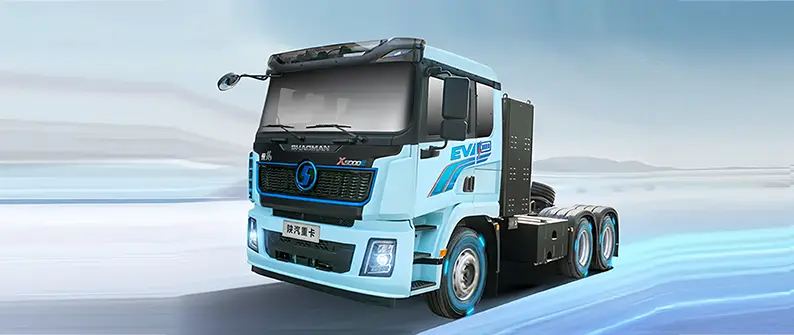
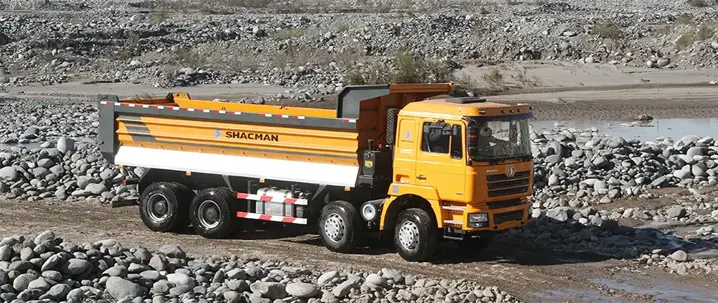
SHACMAN dump trucks, electric tractors, LNG trucks and specialized industrial vehicles can be configured for different stages of Indonesia’s evolving nickel logistics system, from open-pit mines to HPAL facilities, industrial parks and ports.
Indonesia continues to expand its mineral downstreaming strategy, with nickel remaining a major component of the country’s industrial investment landscape.
The downstream value chain is becoming more complex. Instead of exporting raw or lightly processed material, new projects increasingly connect mining with refining, battery precursor production, cathode materials and electric vehicle battery manufacturing.
This creates a larger and more demanding industrial logistics network. Ore, reagents, fuel, slag, intermediate products, containers, spare parts and maintenance supplies must move continuously between mines, processing facilities, warehouses and ports.
HPAL processing is designed to recover nickel and cobalt from laterite ores and requires a highly integrated industrial support system.
Compared with a simple mine-to-smelter transport route, an HPAL facility can create additional logistics flows involving ore feed, sulfuric acid, process chemicals, industrial water, maintenance materials, residue handling and finished intermediate products.
For truck fleets, this means operators may need several specialized vehicle types instead of relying only on conventional mining dump trucks.
| Logistics Stage | Recommended Vehicle Type | Primary Requirement |
|---|---|---|
| Open-Pit Ore Hauling | SHACMAN F3000 / X3000 6×4 or 8×4 Dump Truck | High traction, payload capability and chassis durability |
| Short-Haul Mine-to-Plant Transport | Electric Heavy-Duty Tractor or Dump Truck | Frequent cycles, regenerative braking and lower local emissions |
| HPAL Reagent Transport | Application-Specific Tanker Truck | Chemical compatibility, sealing and transport safety |
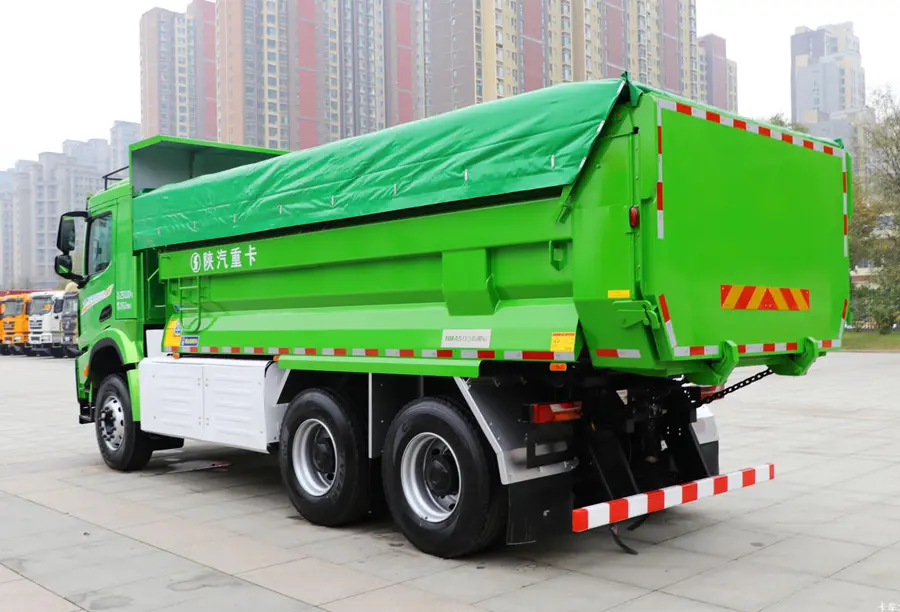
| Smelter Slag Transport | Reinforced Heavy-Duty Tipper | Heat resistance and abrasion-resistant body structure |
| Industrial Park Logistics | SHACMAN X5000 / X6000 Tractor Truck | High utilization, driver comfort and fuel efficiency |
| Port and Container Transport | 6×4 Tractor Head + Semi-Trailer | Efficient road transport and predictable operating cost |
| Fuel and Water Support | SHACMAN Tank Truck | Reliable continuous site support |
Battery-electric heavy trucks are not automatically the best solution for every mining route. Their strongest applications are usually predictable, repetitive transport cycles where vehicles return frequently to fixed charging points.
Examples may include short-distance movement between a mine and processing plant, internal industrial park transport, port shuttle routes and other closed-loop operations.
These applications can allow fleet operators to plan charging around shift schedules and make better use of regenerative braking during repeated stop-and-go or downhill operations.
Closed-loop routes offer several advantages for electric fleet deployment:
These characteristics make it easier to calculate battery capacity, charging demand and vehicle utilization before deployment.
Indonesia’s high temperature and humidity can increase the thermal load on electric truck batteries, inverters, motors and charging equipment.
A mining or industrial EV configuration should therefore include a thermal management system designed to maintain battery temperature within a suitable operating range.
Cooling performance becomes particularly important when vehicles operate continuously, charge frequently or work under high payload conditions.
A successful electric mining truck project begins with charging infrastructure planning rather than vehicle procurement alone.
Fleet operators should evaluate:
Without adequate charging capacity, an electric fleet may experience lower utilization even if the trucks themselves perform well.
For longer routes where charging infrastructure is not yet practical, LNG or natural-gas-powered heavy trucks may provide another option.
Gas-powered vehicles can be suitable for industrial logistics routes where refueling infrastructure is available and where operators want to reduce dependence on conventional diesel fleets.
However, the economic case depends on local gas prices, refueling access, annual mileage, maintenance requirements and fleet utilization.
Green logistics does not mean every truck must immediately become electric or LNG-powered.
Remote open-pit mining operations can still require diesel heavy-duty trucks because of long working hours, high payloads, difficult terrain and limited energy infrastructure.
In these applications, reducing emissions may depend on better truck configuration, lower idling time, efficient powertrain matching, preventive maintenance and improved dispatch planning.
For many nickel projects, a mixed-energy fleet can provide a more realistic transition strategy.
Heavy diesel dump trucks can continue operating in severe mine sections, while electric trucks are used on short closed-loop routes and LNG or efficient diesel tractors handle longer industrial and port logistics.
This approach allows fleet operators to apply each powertrain where it delivers the greatest operational benefit.
Even a low-emission truck can operate inefficiently if its powertrain is poorly matched to the route.
Vehicle configuration should consider:
Correct matching helps reduce unnecessary energy consumption and improves major component life.
Mining routes often include significant elevation differences.
Electric trucks operating downhill can use regenerative braking to convert part of the vehicle’s kinetic energy back into electrical energy.
The practical benefit depends heavily on route design, payload, speed, gradient and battery state of charge.
For this reason, route data should be analyzed before estimating energy recovery or vehicle range.
Carbon reduction is not only a question of fuel type.
Fleet efficiency can also improve through better dispatching, reduced empty mileage, optimized payloads, preventive maintenance and fewer unplanned breakdowns.
A truck that frequently operates empty, waits for loading or experiences mechanical downtime can create unnecessary energy consumption regardless of its powertrain.
Nickel processing facilities operate continuously, making transport reliability critical.
A truck failure can interrupt material flow between production stages, so vehicle availability often matters more than maximum theoretical payload.
Fleet managers should therefore evaluate uptime, spare parts availability and maintenance response alongside fuel or energy consumption.
Nickel mining and industrial roads generate fine dust that can accelerate wear in engines, cooling systems, electrical connectors and moving components.
Diesel trucks should use effective air filtration and regular intake inspection, while electric trucks also require protection for battery cooling systems, electrical cabinets and high-voltage connectors.
Indonesia’s nickel industrial areas may combine high humidity, coastal salt exposure and chemically aggressive industrial environments.
Chassis coatings, electrical connector sealing and routine underbody inspection are therefore important for long-term reliability.
Specialized tanker vehicles require additional engineering according to the transported material, including suitable tank construction, valves, seals and corrosion protection.
Keeping trucks in service longer reduces the operational disruption and resource waste associated with premature component replacement.
For remote projects, fleet operators should establish a critical spare parts inventory based on vehicle population and duty cycle.
Important stock may include:
Indonesia’s latest downstream investment strategy is moving beyond mining and basic smelting toward more advanced battery materials.
HPAL projects can produce intermediate nickel materials that are further processed into nickel sulfate and battery precursor products.
As this value chain expands, logistics requirements will become increasingly specialized and will create demand for more efficient heavy-duty transport systems.
Mine and industrial transport represents only one part of a nickel product’s total lifecycle emissions, but it remains an area where operators can take direct action.
Electric trucks, lower-carbon fuels, reduced idling, optimized routes and higher fleet utilization can all contribute to lower transport-related emissions.
For producers supplying global battery and EV markets, transport efficiency can also support broader traceability and sustainability objectives.
Before selecting vehicles, project operators should provide detailed operating information.
These parameters help determine whether diesel, LNG, battery-electric or a mixed fleet is the most appropriate solution.
They can be well suited to predictable short-haul and closed-loop operations where charging infrastructure is available. Severe remote mine routes require separate technical evaluation.
HPAL stands for High Pressure Acid Leach. It is a hydrometallurgical processing method used to recover nickel and cobalt from certain laterite ores and can produce intermediate materials for battery supply chains.
Nickel customers increasingly consider emissions, traceability and supply-chain sustainability, particularly for materials used in electric vehicle batteries.
No. Powertrain selection should depend on route distance, terrain, payload, charging access, operating hours and total cost of ownership.
Yes. Mixed fleets can allow operators to use electric trucks on predictable short routes while retaining diesel heavy-duty vehicles for severe or remote mining operations.
Charging capacity determines how many vehicles can operate continuously and how charging can be integrated into loading, unloading and shift schedules.
Depending on the application, SHACMAN F3000 and X3000 dump trucks can support mining operations, while X5000 and X6000 tractor platforms can support industrial park and port logistics.
For Indonesian mining, HPAL, smelter and industrial logistics projects, vehicle configuration should be based on actual site conditions rather than a standard specification.
DECHUANG can support SHACMAN heavy-duty trucks and truck spare parts, including engine components, FAST transmission parts, Hande axle components, chassis parts, cab parts and common maintenance items.
Website: shacmantruck.shop
Alibaba:
Alibaba International Store
WhatsApp: +86 153 4928 5748
Email:
allx1@sxdcjg.cn

Copyright @2026 © 2026 Shaanxi Dechuang Jugang Trading Co., Ltd. All rights reserved.