Are you interested in a specific offer or one of our products? Would you like advice?
We are here for you.
Indonesia is becoming one of Southeast Asia’s most important markets for heavy-duty trucks, mining vehicles, port logistics and new-energy commercial vehicles. As the country continues to expand industrial development, nickel processing, logistics infrastructure and electric vehicle supply chains, fleet operators are increasingly evaluating trucks not only by purchase price, but also by fuel efficiency, energy type, lifecycle cost, charging or refueling infrastructure, local service capability and long-term vehicle uptime.
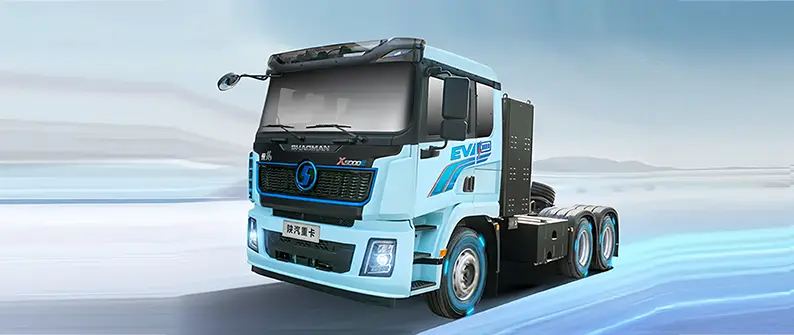
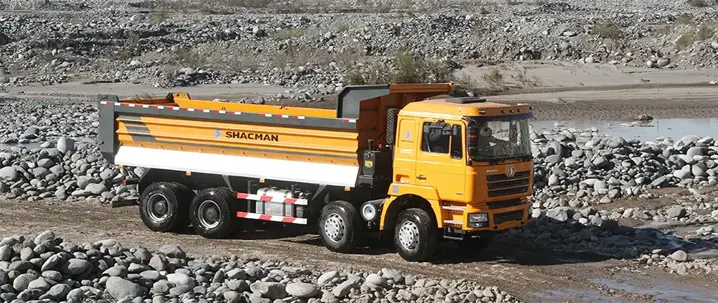
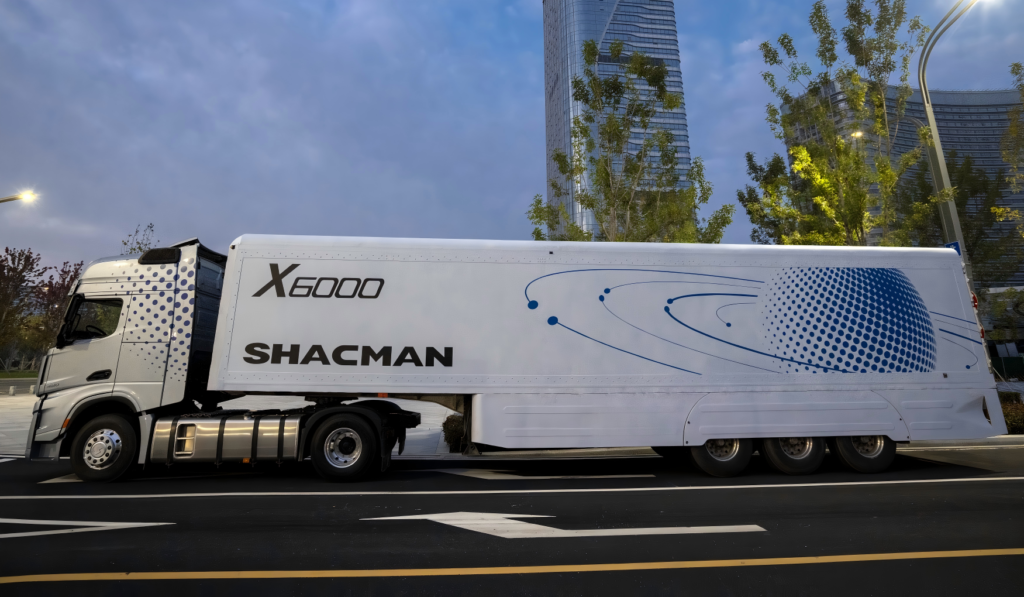
SHACMAN is expanding its presence in Indonesia with a broader heavy-duty truck portfolio that includes high-horsepower diesel trucks, electric trucks, LNG-powered vehicles and other new-energy platforms. The SHACMAN X6000 720HP flagship represents the high-performance end of the lineup, while new-energy trucks are aimed at fleets seeking lower emissions and more efficient operation in ports, industrial parks, mining zones and regional logistics.
This guide explains how SHACMAN’s new-energy strategy fits Indonesia’s transport market, where the X6000 720HP can be used, which applications are suitable for electric or LNG trucks, and what fleet operators should evaluate before transitioning from conventional diesel trucks.
Indonesia combines several transport environments that create strong demand for commercial vehicles:
These applications require different truck configurations, powertrains and service strategies. A truck suitable for long-haul freight may not be ideal for short-haul mining transport, while an electric tractor can perform well in a closed-loop industrial park but may not yet be the best choice for remote routes without charging infrastructure.
The SHACMAN X6000 720HP flagship is designed for applications where high power output, heavy gross combination weight and long-distance productivity are important.
High horsepower can be valuable for:
However, horsepower alone does not determine operating efficiency. Engine output, transmission gearing, axle ratio, trailer weight, road gradient and cruising speed must be matched as a complete system.
| Application | Operating Requirement | Why X6000 720HP Can Fit |
|---|---|---|
| Long-Haul Freight | High mileage and stable cruising | Strong reserve power and premium cab comfort |
| Heavy Container Transport | High gross combination weight | High power output and heavy-duty drivetrain |
| Mountain Routes | Steep gradients and repeated climbing | High torque and stronger power reserve |
| Industrial Logistics | High vehicle utilization | Designed for premium logistics operations |
| Oversized Freight | Heavy trailer loads | Suitable when correctly configured for the route |
For professional fleet operators, the objective should not be maximum horsepower. The goal should be the lowest cost per ton-kilometer while maintaining sufficient performance.
A 720HP truck can provide excellent performance in heavy-duty applications, but if the route is mainly flat and the trailer is relatively light, a lower-power configuration may provide better fuel economy.
Before selecting a high-horsepower tractor, buyers should evaluate:
Indonesia’s growing EV ecosystem and industrial development are creating more interest in electric and lower-emission heavy-duty vehicles.
For fleet operators, new-energy trucks can offer advantages in specific applications, especially where routes are predictable and infrastructure is centralized.
SHACMAN’s new-energy portfolio includes battery-electric, LNG and other alternative-energy commercial vehicle platforms for different operating conditions.
Battery-electric trucks are generally most effective on routes with predictable mileage and centralized charging.
Suitable applications may include:
These routes make it easier to plan charging around loading, unloading and driver shift schedules.
Closed-loop routes allow fleet operators to calculate energy demand more accurately.
Important advantages include:
These conditions reduce uncertainty and make fleet energy planning more reliable.
One of the most important factors in an electric truck project is charging infrastructure.
Fleet operators should calculate:
A strong electric truck fleet cannot operate efficiently if charging infrastructure becomes the bottleneck.
Indonesia’s high temperatures and humidity increase thermal management requirements for electric trucks.
Battery temperature directly affects performance, charging speed and long-term battery life.
Fleet operators should therefore evaluate:
Electric trucks can recover part of their kinetic energy during deceleration and downhill operation.
This can be particularly useful on routes where trucks repeatedly descend with predictable gradients.
However, the actual benefit depends on payload, route profile, speed and battery state of charge.
LNG-powered heavy trucks can provide another transition option where charging infrastructure is limited but gas refueling infrastructure is available.
They may be suitable for:
The business case depends on local LNG prices, refueling availability, annual mileage and maintenance capability.
New-energy adoption does not mean diesel trucks will disappear immediately.
Remote mining, long-distance freight and severe-duty applications may still require diesel trucks because of energy infrastructure limitations and operating flexibility.
For these fleets, efficiency can still be improved through:
For many Indonesian operators, the most realistic strategy may be a mixed fleet rather than replacing every diesel truck at once.
A typical fleet could use:
This allows each powertrain to be used where it provides the strongest operational advantage.
| Powertrain | Best Application | Main Advantage | Main Limitation |
|---|---|---|---|
| Diesel | Remote and severe-duty operations | Range and infrastructure availability | Fuel cost and emissions |
| Battery Electric | Closed-loop and short-haul routes | Lower local emissions and regenerative braking | Charging infrastructure and range |
| LNG | High-mileage transport corridors | Alternative fuel option for long routes | Refueling network availability |
Fleet operators should compare vehicles based on total cost of ownership rather than initial purchase price.
A TCO analysis should include:
Electric truck economics should not be compared with diesel using fuel cost alone.
The calculation should also consider:
A truck creates value only when it is operating.
Downtime can be caused by:
For this reason, local parts and service support should be part of the fleet procurement decision.
Professional fleets should maintain critical spare parts based on vehicle population and operating conditions.
Typical stock may include:
Indonesia’s nickel industry requires large numbers of heavy-duty vehicles for ore transport, industrial park logistics, port freight and smelter support.
Different stages of the nickel supply chain require different vehicle types:
As Indonesia develops more integrated nickel processing and battery material projects, transport efficiency is becoming part of the broader sustainability discussion.
Electric and lower-emission trucks can help reduce transport-related emissions in suitable operating scenarios, especially inside industrial parks and closed-loop logistics systems.
SHACMAN’s recent engagement with Indonesian partners and government representatives reflects a more localized market approach.
Instead of relying only on vehicle exports, long-term market development depends on:
The X6000 720HP is a high-horsepower SHACMAN flagship truck designed for demanding long-haul and heavy-duty transport applications.
They can be suitable for closed-loop routes, industrial parks, ports and short-haul logistics where charging infrastructure and operating schedules are predictable.
They can be suitable where LNG refueling infrastructure is available and the fleet operates high annual mileage.
Not necessarily. A mixed-energy fleet can be more practical because different routes require different powertrain characteristics.
TCO includes energy cost, maintenance, infrastructure, downtime, spare parts and residual value, not just the initial vehicle price.
Potential applications include port logistics, industrial parks, mine-to-plant transport, warehouse distribution and other predictable transport routes.
Buyers should evaluate charging infrastructure, daily mileage, payload, route gradient, operating hours, battery thermal management and local technical support.
For SHACMAN X6000 tractor trucks, electric trucks, LNG trucks, mining vehicles and spare parts support for Indonesia, contact our international heavy-duty truck supply team.
Website: shacmantruck.shop
Alibaba:
Alibaba International Store
WhatsApp: +86 153 4928 5748
Email:
allx1@sxdcjg.cn

Copyright @2026 © 2026 Shaanxi Dechuang Jugang Trading Co., Ltd. All rights reserved.