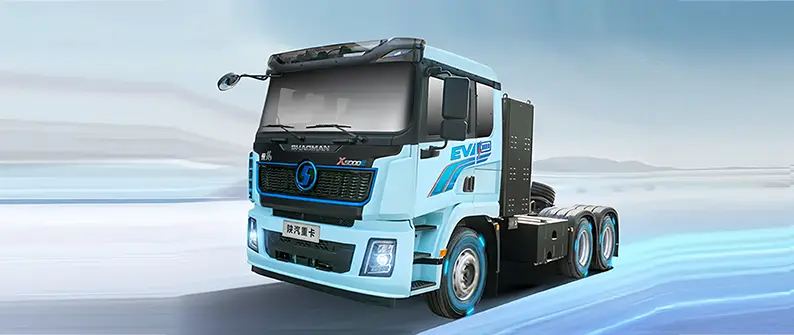
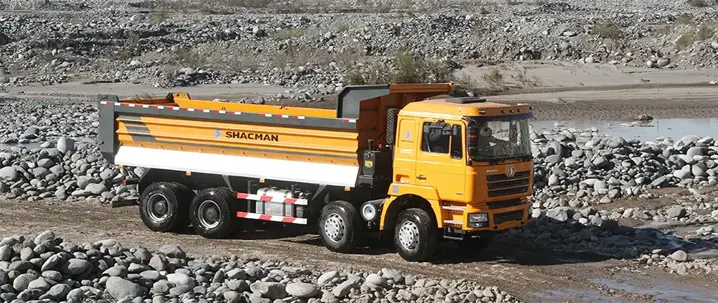
Are you interested in a specific offer or one of our products? Would you like advice?
We are here for you.
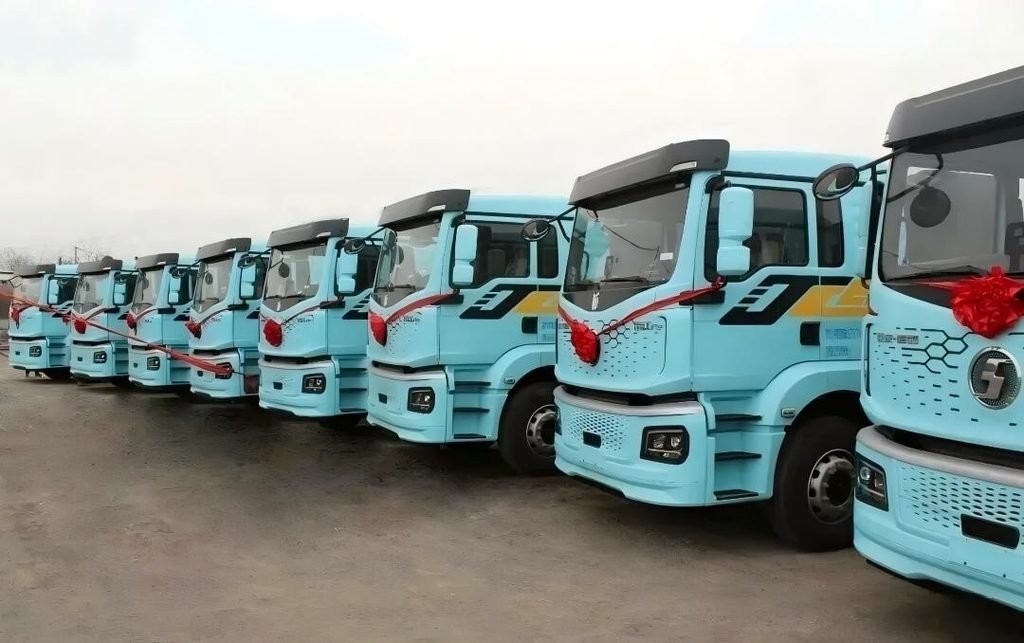
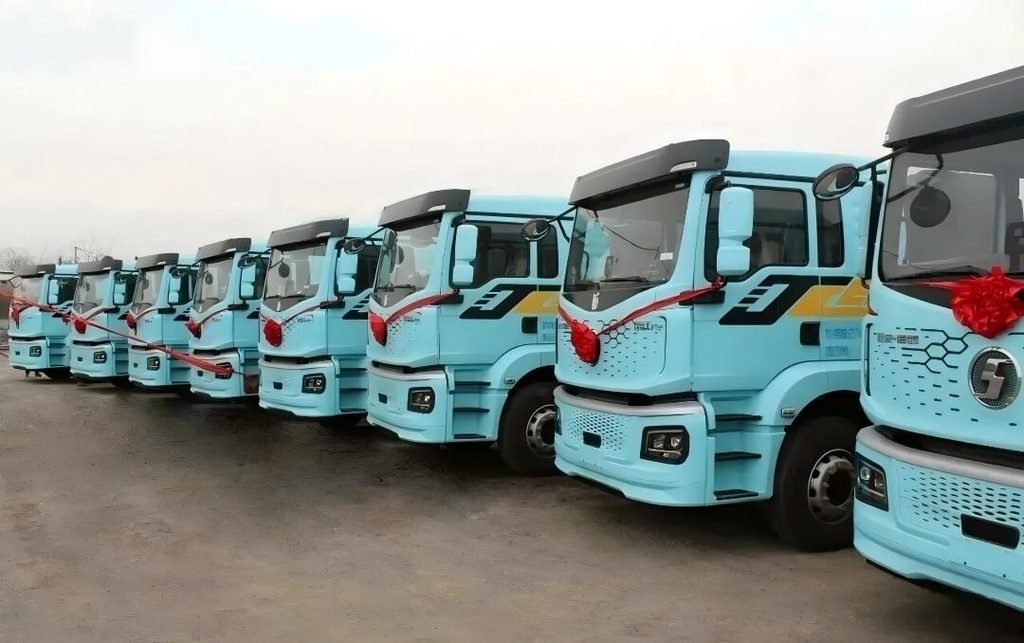
A major new-energy heavy truck agreement has highlighted the accelerating shift toward green logistics and fleet electrification in China. Proton Automobile and Jiangsu Xugang Logistics Service Co., Ltd. signed an agreement covering 100 new-energy heavy trucks, with the first 25 vehicles delivered on the same day.
The cooperation reflects a broader change in the commercial vehicle industry. Fleet operators are no longer evaluating heavy trucks only by horsepower, payload and purchase price. Energy efficiency, charging infrastructure, vehicle uptime, operating cost and carbon reduction are becoming equally important.
This article explores why new-energy heavy trucks are becoming more attractive for industrial logistics, where battery-electric trucks make the most sense, how hydrogen fuel-cell trucks may complement electric fleets, and what operators should consider before large-scale deployment.
The agreement between Proton Automobile and Xugang Logistics covers 100 new-energy heavy trucks, with 25 vehicles delivered in the first batch.
This type of large fleet order is important because it moves new-energy heavy trucks beyond small pilot projects and into more practical, scaled operations.
For industrial logistics companies, the transition to electric and hydrogen-powered heavy trucks is becoming easier to justify when routes are predictable, fleet utilization is high and charging or refueling infrastructure can be centralized.
Industrial logistics has several characteristics that can make it suitable for battery-electric heavy trucks:
These conditions allow operators to calculate energy demand more accurately and reduce uncertainty around charging schedules.
Battery-electric heavy trucks are generally most effective on short- and medium-distance routes with predictable cycles.
Typical applications include:
In these environments, centralized charging infrastructure can support high daily utilization.
Closed-loop routes provide more predictable operating data.
Fleet managers can estimate:
This makes it easier to design an efficient charging strategy and control operating costs.
An electric truck fleet cannot be planned independently from its charging network.
Fleet operators should evaluate:
Insufficient charging capacity can reduce fleet utilization even when the trucks themselves perform well.
Battery-electric trucks can recover part of their kinetic energy during braking and downhill operation.
This can be especially useful in industrial and closed-loop transport routes with frequent deceleration.
The practical benefit depends on payload, route gradient, speed and battery state of charge.
Proton Automobile is developing both battery-electric and hydrogen fuel-cell commercial vehicles.
Hydrogen fuel-cell trucks may be attractive for some longer-distance or high-utilization applications where fast refueling and extended operating range are important.
However, hydrogen deployment depends heavily on:
| Technology | Best Use Case | Main Advantage | Main Challenge |
|---|---|---|---|
| Battery Electric | Short / medium closed-loop routes | High energy efficiency and low local emissions | Charging time and infrastructure |
| Hydrogen Fuel Cell | Longer-distance high-utilization fleets | Fast refueling and longer range potential | Hydrogen infrastructure and cost |
New-energy heavy trucks should be compared using total cost of ownership rather than initial purchase price alone.
A full TCO calculation should include:
Electric trucks usually deliver the strongest economic case when annual mileage is high and charging can be integrated into normal operating schedules.
Low-utilization fleets may take longer to recover the additional cost of vehicle and charging infrastructure.
Battery-electric trucks have fewer traditional mechanical components than diesel trucks, but they introduce new maintenance priorities.
Important systems include:
Battery temperature has a direct effect on performance, charging speed and battery life.
Fleet operators should monitor:
New-energy powertrains do not reduce the importance of traditional heavy truck engineering.
Industrial logistics still requires:
Battery weight must also be considered when calculating payload and axle loads.
A lower-carbon logistics system also depends on:
A poorly utilized electric truck can still create inefficient fleet operations.
Before replacing diesel trucks, operators should collect real operating data.
These parameters help determine whether battery-electric, hydrogen or a mixed fleet is the best solution.
Not every route needs the same technology.
A mixed-energy strategy may include:
This allows each technology to be used where it performs best.
A 100-unit agreement shows that new-energy heavy trucks are moving toward commercial-scale deployment.
Large fleet orders can accelerate:
New-energy commercial vehicle manufacturers increasingly need to provide more than trucks.
Future fleet solutions may combine:
The agreement covers 100 new-energy heavy trucks, with the first 25 delivered in the initial batch.
Jiangsu Xugang Logistics Service Co., Ltd. is the logistics partner in the agreement.
The company focuses on battery-electric and hydrogen fuel-cell commercial vehicles.
They are most suitable for predictable closed-loop routes such as industrial parks, steel logistics, ports and mine-to-plant transport.
Not necessarily. The best technology depends on route length, infrastructure, energy cost and fleet utilization.
Charging infrastructure and fleet energy planning are among the most important challenges.
For new-energy heavy trucks, electric tractors, industrial logistics vehicles and fleet support solutions, contact our international heavy-duty truck supply team.
Website: shacmantruck.shop
Alibaba:
Alibaba International Store
WhatsApp: +86 153 4928 5748
Email:
allx1@sxdcjg.cn

Copyright @2026 © 2026 Shaanxi Dechuang Jugang Trading Co., Ltd. All rights reserved.