
Are you interested in a specific offer or one of our products? Would you like advice?
We are here for you.
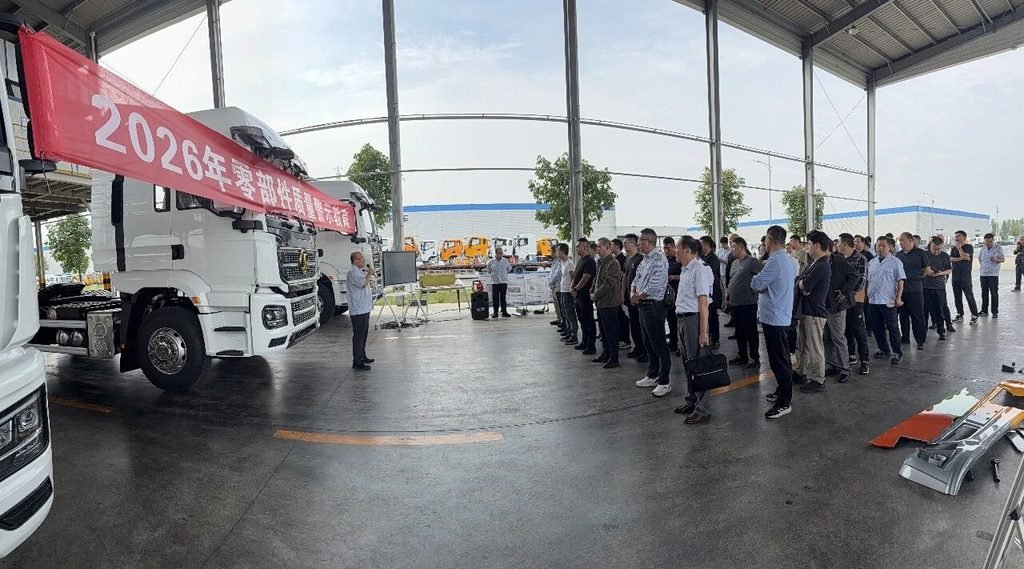
Shaanxi Auto Commercial Vehicle strengthened its supplier and component quality management during the 2026 “Quality Month” campaign, with a warning education meeting focused on typical component quality cases, incoming inspection standards, process control and closed-loop issue management.
The meeting, held on September 16, brought together company management, department leaders and supplier representatives. Its purpose was to reinforce quality responsibilities across the supply chain and reduce the risk of repeated component defects before they affect vehicle production or customer operation.
For heavy-duty truck manufacturers, component quality is directly connected to vehicle reliability, maintenance cost, fleet uptime and after-sales performance. Engines, transmissions, axles, braking systems, electrical components, cab parts and chassis components must all meet stable and repeatable quality standards throughout their lifecycle.
A heavy-duty truck contains thousands of parts and subassemblies. A quality problem in even one critical component can affect vehicle safety, reliability or operating efficiency.
For this reason, component quality management is not limited to final vehicle inspection. It begins with supplier selection, incoming inspection, production process control and traceability.
Key quality risks may involve:
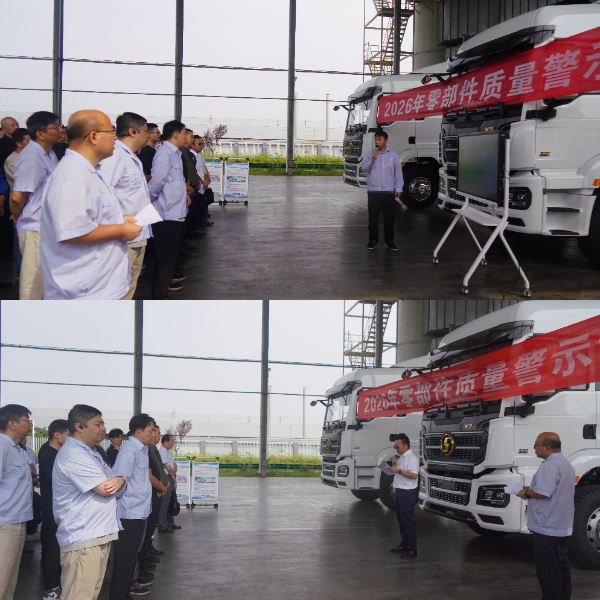
The Material Procurement Department emphasized incoming inspection as one of the key control points in the component lifecycle.
Incoming inspection helps identify non-conforming parts before they enter production.
Typical inspection items may include:
A strong incoming inspection process can reduce production disruption and prevent defective parts from moving further into the assembly line.
Quality control must continue after a component passes incoming inspection.
Manufacturing and assembly processes should be monitored to ensure that parts are installed, adjusted and tested according to the correct standards.
Process control may include:
The meeting also emphasized clear “red-line” quality requirements.
These requirements establish unacceptable quality conditions and clarify responsibilities for suppliers and internal teams.
For critical truck components, red-line control is especially important because failures can lead to vehicle downtime, customer complaints or safety risks.
Heavy truck manufacturers depend on a large supplier network.
This means final vehicle quality is closely linked to supplier process capability and quality discipline.
Supplier representatives at the meeting pledged to maintain strict quality standards and strengthen process control.
Effective supplier quality management should include:
The meeting emphasized closed-loop management for component quality issues.
A quality problem should not be considered solved after the defective part is replaced. The root cause should be identified, corrective measures implemented and the result verified.
A practical closed-loop process may include:
Replacing a failed component may restore one vehicle, but root cause analysis prevents the same problem from affecting other vehicles.
Root cause analysis may examine:
The meeting required personnel to use typical cases as a warning and apply lessons across different departments and processes.
This approach helps prevent isolated quality problems from being treated as one-time incidents.
Quality information should be shared across:
Traceability allows manufacturers to identify which supplier batch, production date or vehicle group may be affected by a quality problem.
This is especially important for high-volume vehicle production.
A strong traceability system can reduce the scope of recalls or corrective actions and help quality teams respond more efficiently.
Digital quality management systems can connect supplier data, inspection records, production problems and after-sales feedback.
This allows quality teams to monitor recurring issues, identify abnormal trends and improve decision-making.
Digital systems can also support:
For fleet operators, component quality has a direct economic impact.
A failed transmission part, axle component, brake part or electrical sensor can stop a truck even if the rest of the vehicle is in good condition.
Downtime affects:
After-sales parts quality is just as important as original production quality.
Fleet operators should confirm that replacement parts match the correct specification and application.
Important considerations include:
Engine parts require tight manufacturing tolerances and material consistency.
Typical quality-sensitive components include:
Transmission quality affects shifting performance, drivetrain reliability and vehicle uptime.
Critical inspection areas may include:
Axles, suspension parts and chassis components operate under continuous heavy loads.
Failures in these areas can affect vehicle stability, tire wear and safety.
Important components include:
Quality management should continue after a vehicle enters the market.
Warranty claims, repair records and customer feedback can reveal issues that may not appear during factory inspection.
This information should be returned to engineering, purchasing and manufacturing teams to support continuous improvement.
As SHACMAN trucks continue to operate across mining, construction, logistics and industrial markets worldwide, consistent component quality becomes increasingly important.
Different markets may expose trucks to:
Stable parts quality and traceability help reduce risk across these different operating environments.
The meeting focused on learning from component quality cases, clarifying quality standards, strengthening supplier responsibilities and improving closed-loop risk management.
Incoming inspection helps identify non-conforming parts before they enter production, reducing the risk of defects reaching vehicle assembly.
Closed-loop quality management means identifying a problem, analyzing its root cause, implementing corrective action and verifying that the issue has been prevented from recurring.
Heavy trucks rely on thousands of supplied components. Supplier quality directly affects vehicle reliability, maintenance cost and customer satisfaction.
Traceability allows manufacturers to identify affected batches, suppliers and vehicles more quickly when a quality problem occurs.
Verified parts reduce the risk of incorrect fitment, inconsistent materials and premature failure.
For SHACMAN heavy-duty truck parts, engines, transmissions, axles, cab components and chassis parts for international markets, contact our truck parts supply team.
Website: shacmantruck.shop
Alibaba:Alibaba International Store
WhatsApp: +86 153 4928 5748
Email:allx1@sxdcjg.cn

Copyright @2026 © 2026 Shaanxi Dechuang Jugang Trading Co., Ltd. All rights reserved.