Are you interested in a specific offer or one of our products? Would you like advice?
We are here for you.
Indonesia’s nickel industry does not rely on a single transport task. A complete mining and smelter logistics system may include ore hauling, stockyard transfer, slag transport, fuel supply, container movement, port logistics, industrial liquid transport and long-distance freight.
For fleet operators, the key challenge is not simply choosing a powerful truck. The real objective is to build a vehicle fleet that can maintain high uptime, control fuel consumption, withstand tropical mining conditions and keep maintenance costs predictable throughout the operating cycle.
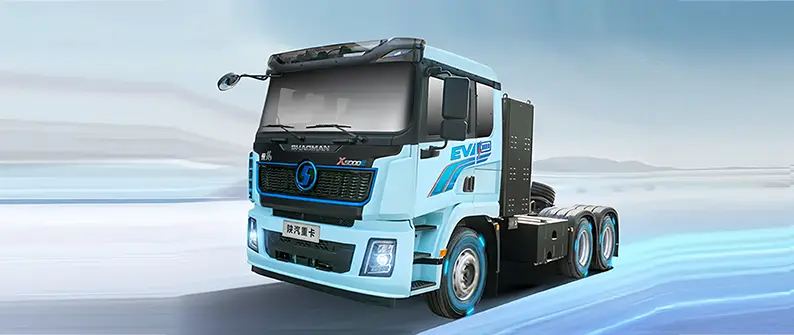
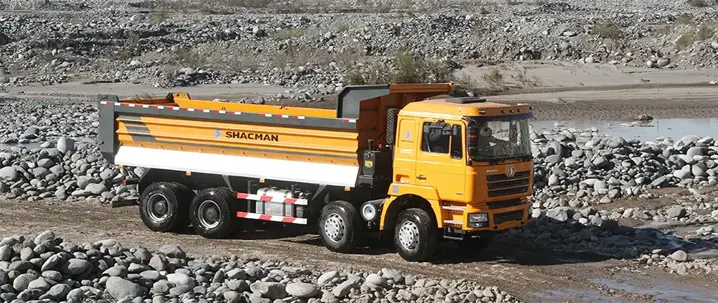
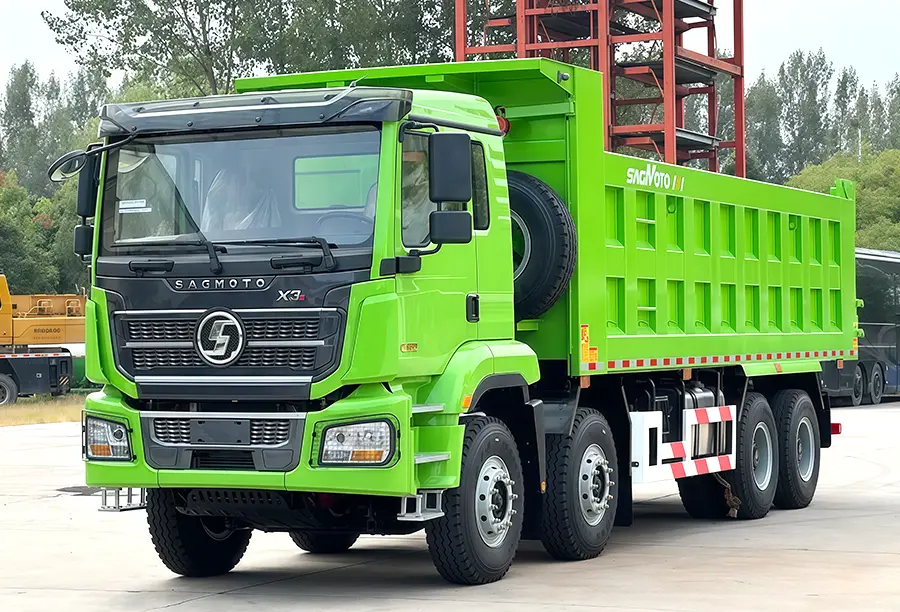
SHACMAN heavy-duty trucks can be configured for different stages of Indonesia’s nickel supply chain, but the correct vehicle specification should always be matched to actual road, payload, climate and production requirements.
Nickel mining and downstream processing involve several separate transport environments, each with different vehicle requirements.
Open-pit mining requires high traction and strong chassis durability. Smelter zones require reliable low-speed operation and resistance to heat, dust and corrosive environments. Port and industrial park logistics place more emphasis on fuel efficiency, driver comfort and continuous fleet utilization.
A well-designed fleet should therefore combine different SHACMAN truck configurations instead of using the same vehicle specification for every transport task.
Before selecting a truck model, fleet operators should map the full transport cycle.
These operating details determine whether the vehicle should prioritize maximum payload, traction, fuel economy, braking performance, speed or maneuverability.
| Transport Stage | Recommended SHACMAN Configuration | Primary Selection Priority |
|---|---|---|
| Open-Pit Ore Hauling | F3000 / X3000 6×4 or 8×4 Dump Truck | Payload, traction, axle strength |
| Mine-to-Stockyard Transport | Heavy-Duty Mining Dump Truck | Low-speed torque, suspension durability |
| Smelter Slag Transport | Reinforced Tipper Truck | Heat resistance, body wear resistance |
| Industrial Park Freight | X5000 / X6000 Tractor Truck | Fuel efficiency, uptime, driver comfort |
| Port Container Transport | 6×4 Tractor Head + Semi-Trailer | Highway efficiency, low TCO |
| Fuel and Water Supply | SHACMAN Tank Truck | Site support reliability |
| Special Industrial Liquid Transport | Application-Specific Tanker | Material compatibility and safety |
Powertrain matching has a direct impact on fuel consumption, climbing performance, transmission life and operating speed.
For mining applications, engine selection should focus on usable torque rather than only peak horsepower.
A truck operating on steep haul roads with a heavy payload requires strong low-speed torque and stable thermal performance. A truck operating mainly between an industrial park and a port may benefit more from optimized fuel efficiency and higher cruise speed.
FAST transmissions can be matched with different gear ratios depending on the route profile.
Closer low-speed gear spacing is valuable for heavy climbing and difficult starts, while higher-speed logistics applications require efficient cruising ratios.
Incorrect transmission matching can increase fuel consumption, clutch wear and driver fatigue even when the engine power is sufficient.
Axle ratio is one of the most important but often overlooked factors in mining truck configuration.
A higher final-drive ratio can improve low-speed traction and climbing performance but may reduce maximum road speed and increase engine RPM during highway operation.
A lower axle ratio can improve cruising efficiency but may not be suitable for severe mine roads with heavy payloads.
For this reason, axle ratio should be selected according to the actual route rather than copied from a standard vehicle specification.
Hande drive axles are widely used in SHACMAN heavy-duty truck applications.
For severe mining conditions, hub-reduction axle configurations can provide additional wheel-end torque and improve drivetrain durability.
This is especially useful in muddy areas, steep ramps and operations where trucks repeatedly start under full load.
Mining fleets often focus on dump body volume, but material density is more important than nominal cubic capacity.
Nickel ore can be dense and abrasive. If the dump body is too large, operators may overload the chassis before reaching the nominal body volume.
The body should therefore be designed according to:
Wear-resistant steel can be used in high-abrasion applications to extend body service life.
Indonesia’s tropical climate creates additional operating risks for mining fleets.
Heavy rainfall can quickly turn unpaved roads into deep mud, reducing traction and increasing the risk of wheel slip, underbody damage and vehicle recovery incidents.
Fleet preparation should include suitable tires, sufficient ground clearance, proper axle loading, reinforced suspension and effective drainage around key vehicle systems.
Mining trucks often operate at low speed while carrying heavy loads, which reduces natural airflow through the radiator.
At the same time, tropical temperatures, dust and long operating hours increase cooling demand.
A suitable mining configuration should therefore consider radiator capacity, fan performance, coolant condition and cleaning intervals.
Radiator blockage is a common cause of overheating in dusty industrial environments and should be included in daily inspection routines.
Fine nickel dust and mining road dust can significantly accelerate engine wear if the intake filtration system is not maintained properly.
Fleet operators should use multi-stage filtration where appropriate and shorten inspection intervals under severe conditions.
Air filter replacement should be based on actual dust loading rather than only mileage.
Mining truck maintenance should be planned around operating hours and duty cycles, not only distance traveled.
A truck may cover relatively few kilometers in a mine while still operating for long hours under heavy load.
Preventive maintenance programs should monitor:
Remote mining and smelter projects can lose valuable production time when a truck is stopped while waiting for parts.
A critical spare parts inventory should be created based on fleet size, truck model and expected consumption.
Typical high-priority parts include filters, belts, water pumps, brake components, clutch parts, transmission components, axle parts, suspension bushings, electrical sensors and hydraulic components.
Increasing payload may appear to improve productivity, but excessive loading can shorten tire life, increase suspension wear, raise fuel consumption and accelerate drivetrain failure.
In many operations, a slightly lower payload with higher vehicle availability can produce better monthly transport output than an overloaded fleet with frequent downtime.
This is why fleet optimization should focus on tonnes transported per operating hour rather than only tonnes transported per trip.
Total cost of ownership includes more than the purchase price of the truck.
Important TCO factors include:
The best truck configuration is therefore the one that produces the lowest transport cost per ton over the full operating cycle.
Indonesia uses right-hand-drive vehicles, so steering configuration must be confirmed during vehicle specification.
RHD configuration should be integrated at the vehicle engineering stage together with dashboard layout, steering system, mirror position and cab controls.
Buyers should avoid treating right-hand-drive conversion as a simple after-sales modification for heavy-duty mining applications.
Major nickel industrial regions can have very different operating environments.
A truck working inside a smelter complex may travel short distances on relatively controlled roads, while a mining truck outside the industrial park may face deep mud, steep gradients and limited maintenance infrastructure.
Vehicle configuration should therefore be adjusted for the specific project rather than applying one standard specification across all locations.
A large nickel project may use one group of SHACMAN F3000 or X3000 dump trucks for ore transport, another group of heavy-duty tipper trucks for slag movement, and X5000 or X6000 tractor trucks for container and port logistics.
Support vehicles such as fuel tankers, water trucks and maintenance vehicles can then complete the operating system.
This segmented fleet structure helps each truck perform the job it was designed for and can improve overall fleet efficiency.
Fleet performance depends on both vehicle specification and parts availability.
DECHUANG can support SHACMAN fleets with engine parts, FAST transmission components, Hande axle parts, chassis components, cab parts and common maintenance items.
For large Indonesian fleets, spare parts packages can be planned according to vehicle quantity, model, operating hours and maintenance schedule.
Start with payload, road gradient, transport distance, material density, operating hours and road conditions. These factors should then be used to select the engine, transmission, axle ratio, suspension and dump body.
No. The engine should be matched to the operating cycle. Excess power can increase fuel consumption without improving productivity if the transmission and axle ratios are not matched correctly.
Axle ratio affects traction, climbing ability, engine speed and maximum road speed. Mining operations generally require different ratios from highway logistics operations.
Not always. Mining vehicles often work many hours while traveling relatively short distances, so engine hours and operating severity should also be used when planning maintenance.
Recommended stock normally includes filters, cooling system parts, brake components, transmission parts, axle components, suspension parts, electrical sensors and hydraulic system parts.
Yes. RHD configurations can be specified for Indonesian applications and should be confirmed during vehicle selection.
For SHACMAN mining trucks, tractor trucks, dump trucks and spare parts for Indonesian nickel projects, contact our international sales team.
Website: shacmantruck.shop
Alibaba:
Alibaba International Store
WhatsApp: +86 153 4928 5748
Email:
allx1@sxdcjg.cn

Copyright @2026 © 2026 Shaanxi Dechuang Jugang Trading Co., Ltd. All rights reserved.