Are you interested in a specific offer or one of our products? Would you like advice?
We are here for you.

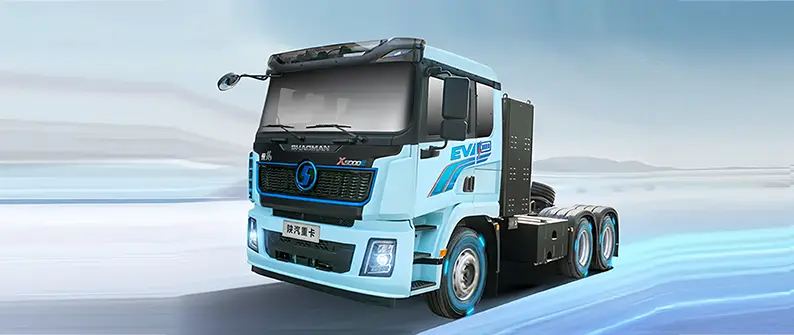
The SHACMAN X6000 is becoming an increasingly important option for Vietnamese logistics companies, fleet operators, port transport businesses and cross-border freight companies that need a premium heavy-duty tractor truck with strong long-distance performance, driver comfort and lifecycle operating efficiency.
Recent SHACMAN X6000 product experience activities in Vietnam have brought the model closer to local transport operators through vehicle demonstrations and direct driving experiences. However, for professional fleet buyers, the key question is not simply whether the X6000 is a premium truck. The more important issue is whether the truck can be correctly configured for Vietnam’s road conditions, freight routes, payload requirements and operating costs.
This guide explains where the SHACMAN X6000 fits in Vietnam’s heavy truck market, how fleet operators should evaluate configuration, powertrain, axle ratio, braking, fuel efficiency, maintenance and spare parts, and how to reduce total cost of ownership over the complete vehicle lifecycle.
Vietnam’s freight market includes several demanding operating environments: long-haul domestic transport, port container logistics, industrial park distribution, construction material transport and cross-border freight.
Each application places different demands on a tractor truck. Long-distance fleets care about fuel economy and driver fatigue. Port fleets care about uptime and frequent stop-and-go operation. Cross-border fleets need reliability, range, spare parts availability and predictable maintenance.
The SHACMAN X6000 is positioned as a premium heavy-duty truck platform designed for high-efficiency logistics and long-distance transportation, making it relevant to many of these applications.
| Application | Typical Requirement | X6000 Selection Focus |
|---|---|---|
| Long-Haul Domestic Freight | Stable cruising, fuel economy, driver comfort | Powertrain efficiency and cab specification |
| Port Container Transport | High utilization and frequent operation | Uptime, maneuverability and maintenance planning |
| Industrial Park Logistics | Repeated freight cycles | Reliability and predictable service cost |
| Cross-Border Transport | Long-distance reliability and route flexibility | Fuel range, braking and spare parts support |
| Highway Tractor Operations | Efficient cruising at sustained speed | Engine, transmission and axle ratio matching |
| High-Value Freight | Stable scheduling and low downtime | Vehicle availability and preventive maintenance |
The purchase price of a heavy truck is only the first part of its real cost.
A professional fleet should evaluate the total cost of ownership, or TCO, over the entire operating period.
TCO normally includes:
For high-mileage logistics fleets, small differences in fuel consumption, maintenance frequency or downtime can create large cost differences over several years.
There is no single X6000 specification that is ideal for every Vietnamese transport company.
Before selecting a vehicle, buyers should define the real operating profile:
These parameters should determine engine output, transmission selection, axle ratio, braking configuration, tires and cab specification.
Higher horsepower does not automatically mean lower transport cost.
A truck with excessive power but an incorrect axle ratio or transmission match may consume more fuel without improving fleet productivity.
For long-haul highway transport, the objective should be to keep the engine operating in an efficient RPM range during normal cruising.
For routes with frequent gradients, heavier combination weights or lower average speed, stronger low-speed torque and suitable gearing become more important.
The transmission determines how effectively engine torque is transferred to the road.
A long-haul tractor requires a different transmission strategy from a truck operating mainly in urban or mountainous conditions.
Transmission selection should consider:
Correct transmission matching can improve acceleration, reduce unnecessary gear changes and help lower fuel consumption.
Axle ratio is one of the most important configuration factors for a long-haul tractor truck.
A higher final-drive ratio generally provides stronger low-speed pulling ability but also increases engine RPM at highway speed.
A lower ratio can improve highway fuel economy, but if the route contains steep gradients or the gross combination weight is high, the truck may struggle to maintain speed efficiently.
Vietnamese fleet operators should therefore select axle ratio according to the actual route rather than using one standard configuration for all operations.
Driver comfort has a direct impact on fleet productivity.
Long-distance drivers may spend many hours inside the cab each day, so seat ergonomics, sleeping space, noise insulation, climate control and visibility can affect fatigue and driving consistency.
For fleets operating overnight or on long intercity routes, cab comfort may also influence driver retention.
Continuous road noise, engine vibration and wind noise can increase fatigue over long driving periods.
A premium long-haul tractor should therefore be evaluated not only by exterior design or engine power, but also by cab noise control and vibration isolation.
Vietnam’s transport network includes flat highways, urban traffic and mountainous sections.
Heavy-duty tractor trucks operating on long downhill roads need stable braking performance to maintain control and reduce brake system heat.
Fleet buyers should consider the complete braking system, including:
For high gross combination weights, auxiliary braking can reduce continuous use of the service brakes during long descents.
Truck fuel consumption is influenced by the complete vehicle system.
Important factors include:
A correctly configured truck can often achieve better real-world efficiency than a more powerful truck that is poorly matched to the route.
Driver behavior can significantly influence operating cost.
Frequent hard acceleration, excessive highway speed, long idle periods and late braking can all increase fuel consumption.
Professional fleets should combine truck procurement with driver training, route planning and fuel monitoring.
Vietnam’s major ports and industrial zones generate high demand for tractor trucks used in container transportation.
Port fleets often operate repeated short- and medium-distance cycles between ports, factories, warehouses and logistics parks.
In this environment, the most important factors are usually:
Vietnam is strategically located within mainland Southeast Asia and supports cross-border road freight with neighboring markets.
Cross-border fleets may experience long daily driving distances, customs waiting time, mixed road surfaces and changing weather conditions.
For these applications, buyers should pay particular attention to:
A commercial truck produces revenue only when it is operating.
Preventive maintenance should therefore focus on avoiding unexpected failures rather than waiting for components to break.
Important inspection items include:
A long-haul truck can accumulate mileage quickly.
Fleet operators should plan service intervals according to actual mileage, operating hours, road conditions and load severity.
Trucks operating continuously on difficult routes may require shorter inspection intervals than vehicles used in light regional transport.
Even a reliable truck can remain out of service for several days if the correct replacement part is unavailable.
For fleet operators, spare parts planning should be treated as part of the vehicle purchase decision.
Common parts that may be stocked locally include:
The correct inventory level depends on fleet size, annual mileage, parts lead time and operating location.
A small urban fleet can rely more on local parts supply, while a large long-haul fleet operating far from major cities may need to keep more critical components in stock.
A highly specified truck does not automatically produce the best business result.
Fleet profitability depends on vehicle availability, maintenance cost and operating consistency.
A slightly simpler configuration with better local service support may outperform a more complex configuration if downtime is significantly lower.
Fleet operators should evaluate more than kilometers traveled.
Useful productivity indicators include:
These indicators provide a clearer picture of whether a truck configuration is profitable over time.
SHACMAN’s recent X6000 experience activities in Vietnam allow fleet operators to evaluate vehicle characteristics directly instead of relying only on technical brochures.
Test-drive events can help customers assess steering feel, visibility, cab comfort, power response, braking and overall suitability for local operations.
They also give manufacturers and distributors direct feedback from customers about route conditions and fleet requirements.
The X6000 is positioned as one of SHACMAN’s premium heavy-duty truck platforms for high-efficiency logistics.
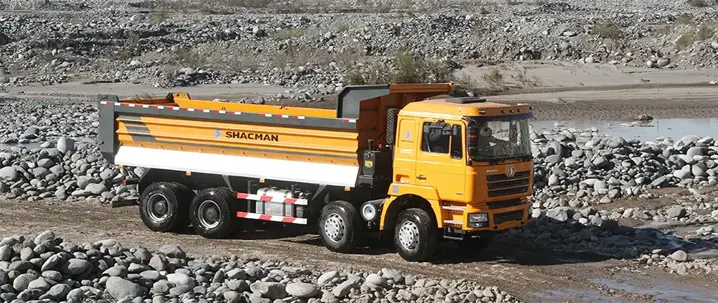
Its market role is different from trucks designed mainly for construction, mining or price-sensitive short-distance transport.
Fleet operators should therefore compare the X6000 against their actual duty cycle rather than selecting it only because it is a higher-end model.
Different SHACMAN platforms serve different transport applications.
The X6000 is generally more suitable for premium long-haul and high-utilization logistics, while other models may provide better value for construction, mining, regional freight or heavy-duty site operations.
The correct choice should be based on operating cost, road conditions and expected annual mileage.
Yes. The SHACMAN X6000 is positioned for premium and high-efficiency heavy-duty logistics, making it suitable for long-haul, container, port and cross-border freight when the vehicle is correctly configured for the route.
There is no single best specification. Engine power, transmission, axle ratio, braking system and cab configuration should be matched to payload, route gradient, annual mileage and operating speed.
No. Excess engine power may increase fuel consumption without improving fleet productivity if transmission and axle ratios are not correctly matched.
Axle ratio affects engine RPM, fuel efficiency, acceleration and climbing capability. The correct ratio helps balance highway economy with pulling performance.
TCO should include vehicle purchase price, fuel, tires, maintenance, spare parts, driver cost, downtime, financing and residual value.
Common inventory can include filters, brake parts, cooling system components, sensors, transmission parts, axle components, suspension parts and other high-consumption maintenance items.
Yes. Depending on configuration, the X6000 can be used for container and logistics tractor applications where high vehicle utilization, fuel efficiency and driver comfort are important.
Preventive maintenance reduces the risk of unexpected downtime and helps extend the service life of major systems such as the engine, transmission, axles, brakes and cooling system.
For SHACMAN X6000 tractor trucks, fleet configuration and spare parts support for Vietnam and other international markets, contact our heavy-duty truck supply team.
Website: shacmantruck.shop
Alibaba:
Alibaba International Store
WhatsApp: +86 153 4928 5748
Email:
allx1@sxdcjg.cn

Copyright @2026 © 2026 Shaanxi Dechuang Jugang Trading Co., Ltd. All rights reserved.