Are you interested in a specific offer or one of our products? Would you like advice?
We are here for you.
Choosing a heavy-duty truck is not simply a question of horsepower, brand recognition or purchase price. For fleet owners, contractors and transport companies, the real decision depends on total cost of ownership, vehicle uptime, fuel efficiency, spare parts availability, local service capability and whether the truck is correctly matched to the job.
SHACMAN has built a strong presence in mining, construction, logistics, port transport and industrial applications by offering a broad range of heavy-duty trucks with competitive acquisition costs, proven powertrain combinations and flexible export configurations.
This guide explains why fleet operators choose SHACMAN trucks, how the main models differ, where they perform best and what buyers should evaluate before purchasing.
The biggest reason many fleets consider SHACMAN is the balance between purchase cost and operating capability.
A truck must generate revenue over thousands of operating hours, so fleet owners increasingly evaluate more than the initial purchase price.
One of SHACMAN’s strongest selling points is total cost of ownership, or TCO.
The purchase price is only one part of the real operating cost. Over several years, fuel, tires, maintenance, spare parts, downtime and driver costs may exceed the original vehicle price.
A practical TCO calculation should include:
Fleet operators should compare cost per kilometer and cost per ton-kilometer rather than focusing only on the purchase price.
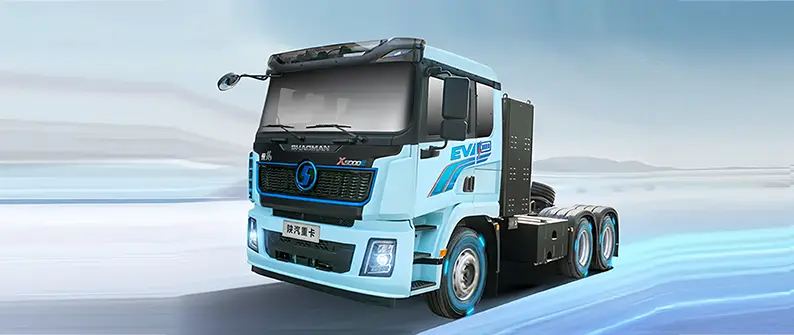
Shacman isn’t competing on diesel alone anymore. Its X6000 LNG long-haul tractors are finding export buyers as natural-gas truck demand climbs, and its hydrogen and LNG fleets are beginning to show up at ports looking to cut their carbon footprint. The point isn’t that Shacman has abandoned the workhorse diesel truck — it hasn’t. It’s that the company is giving buyers options, which is exactly what a market in the middle of an energy transition wants.
| Model | Typical Positioning | Common Applications |
|---|---|---|
| SHACMAN F3000 | Heavy-duty workhorse | Mining, construction, dump truck and tractor operations |
| SHACMAN X3000 | Heavy-duty logistics and mining | Long-haul, mining, industrial and tractor applications |
| SHACMAN H3000 | Value-focused heavy truck | Regional transport, construction and logistics |
| SHACMAN X5000 | High-efficiency heavy-duty platform | Mining, quarry, long-haul and fleet transport |
| SHACMAN X6000 | Premium flagship platform | Long-haul and high-efficiency logistics |
| SHACMAN L3000 | Medium-duty and regional transport | Urban distribution and regional freight |
SHACMAN heavy-duty trucks commonly use established engine, transmission and axle systems such as Weichai engines, FAST transmissions and Hande axles.
For fleet operators, this is important because maintenance planning and spare parts sourcing can be easier when major components are widely used across commercial vehicle markets.
Weichai engines are available in multiple horsepower and torque ranges for mining, construction and logistics applications.
For mining and construction, low-speed torque and thermal performance are especially important. For highway logistics, fuel efficiency and stable cruising become more important.
FAST heavy-duty transmissions are used across many SHACMAN truck configurations.
The correct transmission should be matched to payload, route gradient, operating speed and axle ratio.
Hande axles are widely used in SHACMAN heavy-duty trucks, including hub-reduction configurations for severe-duty applications.
For mining and construction fleets, axle strength and final-drive ratio directly affect traction, durability and fuel consumption.
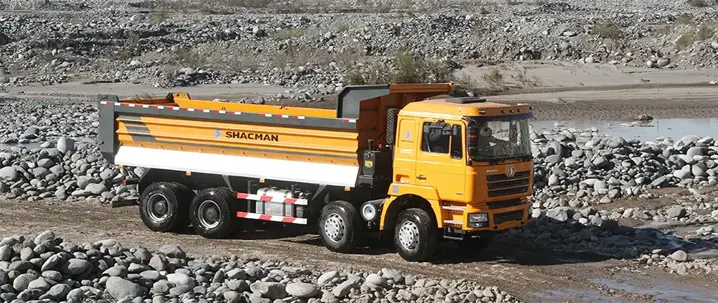
SHACMAN has a strong presence in mining, quarry, construction and infrastructure applications.
These environments require:
Models such as F3000, X3000 and X5000 can be configured for dump truck and severe-duty haulage operations.
SHACMAN is not limited to mining and construction.
The X5000 and X6000 platforms are increasingly focused on long-haul and high-efficiency logistics.
For logistics fleets, important purchasing factors include:
International truck markets have different road conditions, climates and regulatory requirements.
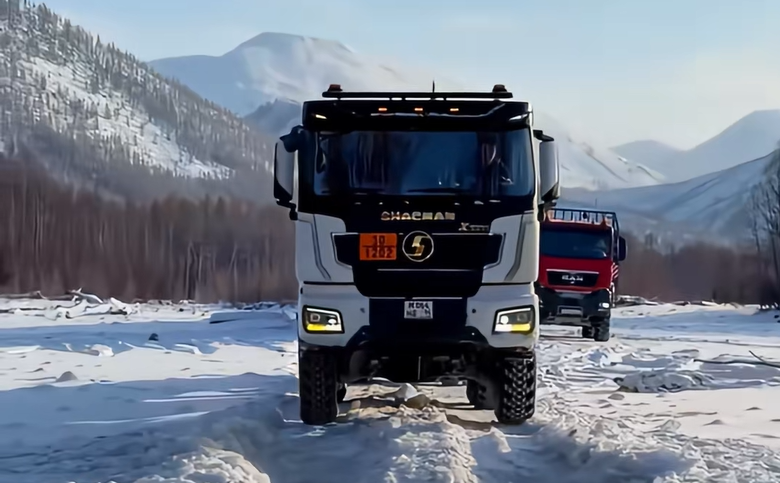
A truck operating in Indonesia may require right-hand drive, tropical cooling and mining-specific filtration, while a truck in Central Asia may require cold-weather preparation.
Export configurations can vary by:
A reliable truck can still lose revenue if a replacement part takes too long to arrive.
Fleet operators should plan common maintenance stock together with the vehicle purchase.
Many SHACMAN trucks operate in mines, industrial parks and transport corridors far from major urban service centers.
In these environments, fleets benefit from:
SHACMAN is expanding beyond conventional diesel trucks.
Depending on the market and application, the brand also offers battery-electric, LNG and other new-energy heavy-duty vehicle platforms.
These technologies may be suitable for:
Driver comfort is an important factor in long-haul truck productivity.
A driver may spend many hours each day in the cab, so seat ergonomics, sleeping space, air conditioning, storage, visibility and noise insulation can affect fatigue and driver retention.
Mining, mountain transport and high-gross-weight logistics require reliable braking systems.
Fleet buyers should evaluate:
Axle ratio directly affects low-speed pulling force, climbing ability and engine RPM at highway speed.
A higher ratio generally improves traction, while a lower ratio can improve fuel efficiency on highway routes.
The best ratio depends on gross vehicle weight, road gradient, average speed and application.
The highest horsepower or most expensive truck is not always the most profitable option.
Fleet performance should be measured by how consistently the vehicle can generate transport output.
Useful fleet KPIs include:
| Industry | Typical SHACMAN Truck | Main Requirement |
|---|---|---|
| Mining | F3000 / X3000 / X5000 Dump Truck | Payload, traction and chassis durability |
| Construction | Dump Truck / Mixer Truck | Durability and site mobility |
| Long-Haul Logistics | X5000 / X6000 Tractor Truck | Fuel efficiency and driver comfort |
| Port Transport | Tractor Truck / Electric Tractor | High utilization and low downtime |
| Industrial Parks | Tractor / Cargo / New-Energy Truck | Efficient repeated transport cycles |
| Regional Distribution | H3000 / L3000 Cargo Truck | Efficiency and operating cost |
SHACMAN trucks are used in a range of overseas applications, including mining operations in Latin America, regional and infrastructure transport in Africa, and industrial and new-energy logistics in Southeast Asia.
These markets have different climates, fuel conditions, road surfaces and payload requirements, which is why local vehicle configuration and service capability matter.
Truck comparisons should focus on actual operating requirements rather than brand reputation alone.
European premium manufacturers often emphasize highway efficiency, advanced electronic systems and driver comfort. Japanese brands may benefit from established regional service networks and long-standing reliability reputations.
SHACMAN can be attractive to fleets that prioritize:
The best choice depends on route conditions, local service capability, annual mileage and total cost of ownership.
SHACMAN is not automatically the right truck for every fleet.
Another brand or configuration may be more suitable if:
Before ordering, fleet buyers should provide:
These details allow the engine, transmission, axle ratio, suspension, tires and body configuration to be matched more accurately.
SHACMAN trucks are widely used in mining, construction, logistics and industrial applications. Reliability depends on correct vehicle configuration, maintenance quality, operating conditions and spare parts support.
Mining fleets often value SHACMAN for heavy-duty chassis configurations, high-torque powertrains, strong drive axles and flexible dump truck specifications.
The X5000 and X6000 are generally positioned for high-efficiency and long-haul logistics, but the final configuration should be selected according to payload, route and annual mileage.
F3000, X3000 and X5000 dump truck configurations can be suitable for mining and quarry transport depending on payload and site conditions.
Availability varies by country, but Weichai engine, FAST transmission, Hande axle and SHACMAN chassis components are widely supplied across many export markets.
Yes. SHACMAN offers new-energy heavy-duty vehicle platforms, including battery-electric and other alternative-energy configurations for suitable logistics and industrial applications.
Operating cost depends on fuel price, maintenance, spare parts, route conditions, payload and downtime. Buyers should compare total cost of ownership rather than purchase price alone.
Yes. Depending on the model, configurations can vary in steering position, engine power, transmission, axle ratio, cooling system, tires and body specification.
For SHACMAN dump trucks, tractor trucks, cargo trucks, special-purpose vehicles and heavy-duty spare parts for international markets, contact our truck supply team.
Website: shacmantruck.shop
Alibaba:
Alibaba International Store
WhatsApp: +86 153 4928 5748
Email:
allx1@sxdcjg.cn

Copyright @2026 © 2026 Shaanxi Dechuang Jugang Trading Co., Ltd. All rights reserved.